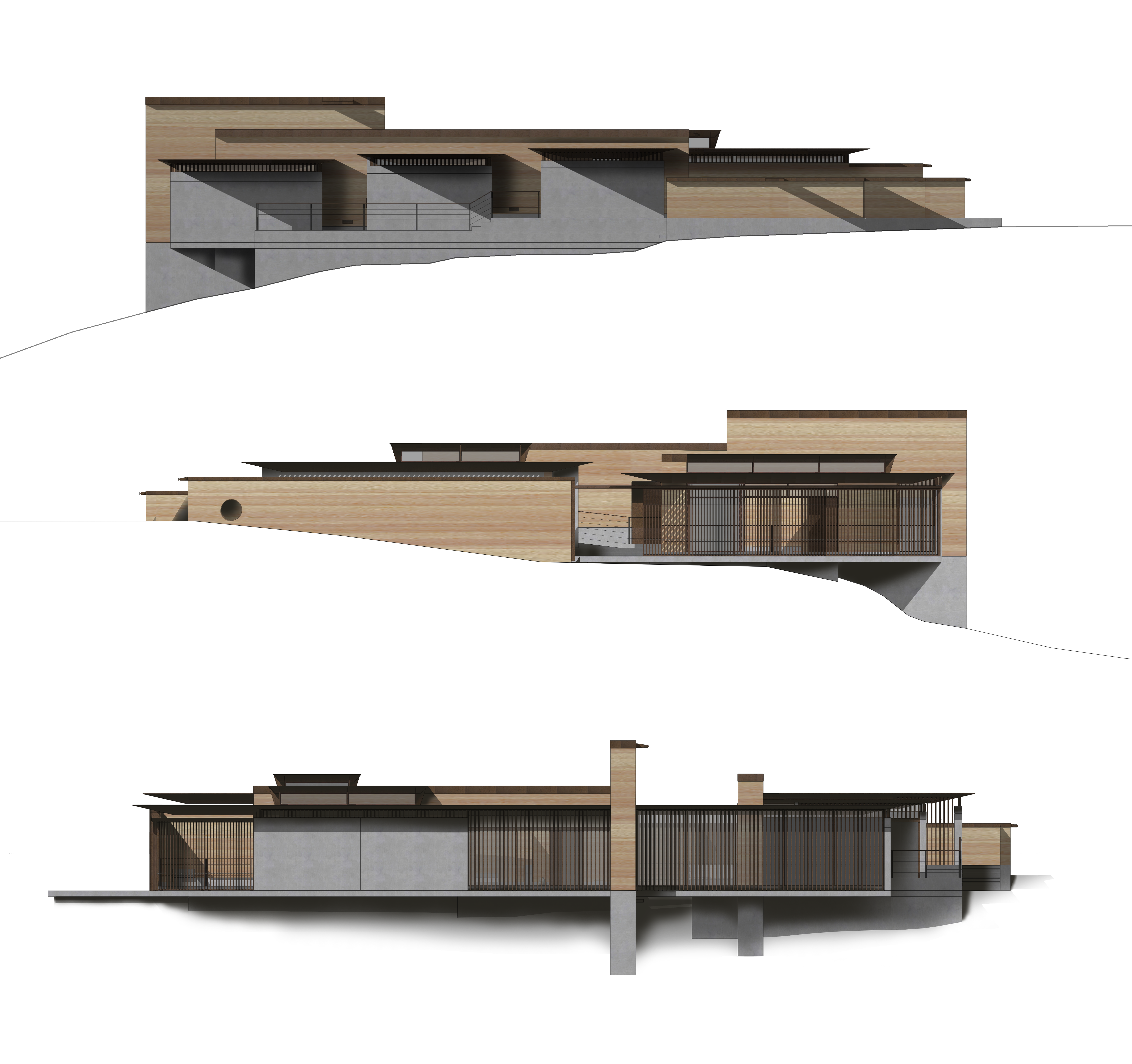


Desert Resonance
New Mexico
2022


The Courtyard: A Passive Cooling System in Desert Architecture
The courtyard design exemplifies a sustainable approach to creating comfortable living environments in desert climates. Leveraging passive cooling strategies transforms extreme outdoor conditions into a microclimate that enhances indoor comfort while reducing energy consumption.
Microclimate Creation – The courtyard acts as a thermal buffer, mitigating extreme temperatures by promoting air movement, providing shaded areas, and incorporating water features and vegetation. This design reduces reliance on artificial cooling systems and fosters a year-round usable outdoor space, even in harsh climates.
Passive Cooling Mechanisms
- Nighttime Cooling: Cooler air descends into the courtyard at night, lowering temperatures. This air is naturally drawn into adjacent rooms, reducing indoor daytime temperatures.
- Evaporative Cooling: Water features enhance cooling through evaporation, further absorbing heat from the surrounding air and lowering temperatures
- Ventilation Enhancement: The courtyard facilitates natural airflow through the building. Hot air rises during the day, pulling cooler air from shaded areas and adjacent spaces into the courtyard, creating a cycle that dissipates accumulated heat. Cooler air from shaded areas at ground level replaces rising warm air, enhancing thermal comfort.
- Vegetation Benefits: Native, drought-resistant plants provide shading and cool the air through transpiration, requiring minimal water and maintenance.
- Height Differences: Taller walls amplify the “chimney effect,” where rising warm air escapes upwards, drawing cooler air into the space.
- Integrated Functionality: The courtyard combines these passive cooling strategies to serve as a thermal regulator and a comfortable outdoor space. Integrating shaded zones, vegetation, and water features softens the harsh desert environment, allowing residents to enjoy outdoor spaces even when the surrounding landscape is inhospitable.