



- Introduction
- The Physics of Thermal Mass
- Mechanisms of Thermal Mass in Buildings
- Use of Thermal Mass in Architecture
- Advantages of Thermal Mass
- Materials for Thermal Mass
- Calculating Thermal Mass
- Use Cases in Vernacular and Modern Architecture
- Conclusion
1: Introduction
Thermal Mass: A Key to Sustainable Architecture
In the realm of sustainable architecture, the concept of thermal mass stands out as a cornerstone. It refers to the ability of materials to absorb, store, and release heat energy. This characteristic is paramount in creating buildings that are not only energy efficient but also comfortable and harmonious with the environment.
The significance of thermal mass lies in its dual ability to mitigate temperature fluctuations and reduce reliance on mechanical heating and cooling systems. By harnessing the natural rhythms of the environment, buildings with effectively utilized thermal mass can achieve remarkable energy efficiency and reduce their carbon footprint, aligning with the principles of eco-engineering.
This chapter aims to delve into the multifaceted aspects of thermal mass. It will explore the underlying physics that governs its function, the mechanisms through which it operates within architectural contexts, and the practical advantages it offers. Furthermore, we will examine a variety of materials known for their thermal mass properties, provide insights into calculating thermal mass in building design, and showcase use cases from both vernacular and modern architecture. This comprehensive overview intends to illuminate how thermal mass is not just a component of building design but a fundamental aspect of creating sustainable, efficient, and comfortable living spaces.
2: The Physics of Thermal Mass
Understanding the Foundations
At its core, thermal mass involves the basic principles of thermodynamics and heat transfer. To fully grasp its application in architecture, one must first understand these underlying physical concepts.
Heat Capacity and Thermal Conductivity
- Heat Capacity: This is a measure of the amount of heat energy required to raise the temperature of a material by a given amount. It’s expressed in units like joules per kilogram per degree Celsius (J/kg°C). Materials with high heat capacity can absorb and store more heat without a significant rise in temperature.
- Thermal Conductivity: This property indicates how well a material can conduct heat. High thermal conductivity materials can quickly transfer heat, while low conductivity materials, often used as insulators, do so more slowly.
Heat Absorption and Release
- Absorption: During warmer periods, materials with high thermal mass absorb and store heat, preventing immediate temperature increases within a building.
- Release: Conversely, as the temperature cools, these materials release stored heat, helping to warm the space. This process is gradual, contributing to a stable indoor environment.
The Role of Density
- Density and Thermal Mass: Generally, denser materials have higher thermal mass. This is because they contain more matter in which to store thermal energy.
3: Mechanisms of Thermal Mass in Buildings
Harnessing Natural Energy for Building Efficiency
The effective use of thermal mass in architecture is more than just a matter of selecting the right materials. It involves a deep understanding of how these materials interact with the building’s environment and the daily and seasonal climatic variations. This section delves into the key mechanisms through which thermal mass impacts building performance.
Diurnal Cycle and Thermal Lag
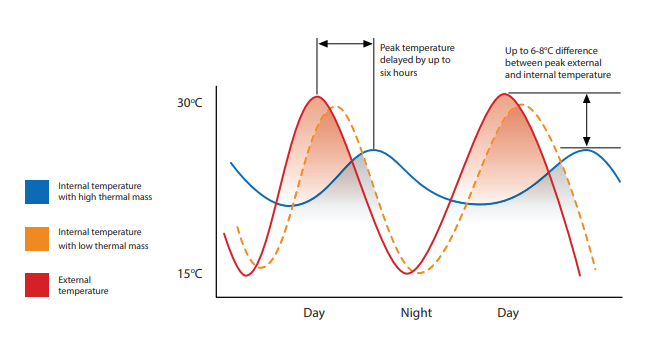
- Balancing Day and Night Temperatures: One of the primary functions of thermal mass is its ability to mitigate the extremes of day and night temperatures. During the day, buildings absorb heat, which is then slowly released during the cooler night, helping to stabilize indoor temperatures.
- Thermal Lag: This term refers to the delay between the hottest part of the day and the peak temperature inside the building. A well-designed thermal mass can significantly increase this lag, enhancing comfort and reducing the need for artificial heating or cooling.
Passive Solar Gain
- Harnessing Solar Energy: In colder climates or during winter months, buildings can be designed to maximize solar gain. Windows positioned to receive maximum sunlight allow heat to be absorbed by the thermal mass, which then radiates it back into the space as temperatures drop.
- Seasonal Adjustments: The effectiveness of passive solar gain can be optimized through seasonal adjustments, such as shading devices in summer to prevent overheating.
Interaction with Insulation
- Complementary to Insulation: While insulation is used to prevent heat transfer, thermal mass works by storing and releasing heat. Together, they create a synergistic effect, where insulation helps in maintaining the energy absorbed or released by the thermal mass, leading to more efficient temperature regulation.
Natural Ventilation
- Enhancing Air Flow: The use of thermal mass is often complemented by natural ventilation strategies. During cooler periods, opening windows can facilitate air flow, using the thermal mass to cool down the building more rapidly.
Impact on HVAC Systems
- Reducing Dependence on Mechanical Systems: By utilizing the natural properties of thermal mass, buildings can reduce their dependence on Heating, Ventilation, and Air Conditioning (HVAC) systems. This not only lowers energy consumption but also minimizes maintenance costs and extends the lifespan of these systems.
4: Use of Thermal Mass in Architecture
Blending Tradition with Innovation
The application of thermal mass in architecture has evolved over centuries, adapting to various cultural, climatic, and technological contexts. This section explores both its historical and contemporary uses, highlighting the versatility and enduring relevance of thermal mass in building design.
Historical Perspective: Vernacular Architecture
- Traditional Wisdom: Long before modern engineering, many cultures intuitively used thermal mass in their buildings. Thick stone walls in European castles, adobe constructions in hot, dry climates, and brick terraces in temperate zones are examples where thermal mass was key to maintaining comfort.
- Climatic Adaptation: Traditional buildings were often uniquely suited to their local climates. For instance, in hot and arid regions, high thermal mass materials were used to cool interiors during the day and release stored heat at night.
Modern Applications: Sustainable and Efficient Design
- Integration in Contemporary Architecture: Today, thermal mass is a critical component in sustainable design, helping buildings meet stringent energy efficiency standards. Modern architects often combine materials like concrete and water with advanced design techniques to optimize thermal performance.
- Technological Synergy: The use of thermal mass in modern buildings is often complemented by technology, such as automated shading systems, smart glass, and integrated heating and cooling systems, enhancing its effectiveness.
Case Studies: Thermal Mass in Action
- Example 1: The Eastgate Centre in Harare, Zimbabwe, famously uses thermal mass in its design, mimicking termite mounds’ natural cooling mechanisms. The building utilizes concrete’s thermal mass to regulate temperature, significantly reducing energy costs.
- Example 2: The BedZED development in London uses high levels of insulation and thermal mass to create a comfortable and energy-efficient living environment. The design demonstrates how thermal mass can be incorporated into urban, high-density housing.
Design Considerations
- Balancing Factors: Effective use of thermal mass in architecture requires a balance of factors such as material selection, building orientation, window placement, and local climate.
- Customization for Climate: The application of thermal mass varies greatly depending on the climate. In hot regions, it’s used to absorb heat during the day and release it at night, while in cooler climates, it’s used to store solar heat and reduce heating demands.
5: Advantages of Thermal Mass
Enhancing Performance and Sustainability
The use of thermal mass in building design brings multiple benefits, ranging from improved energy efficiency to enhanced occupant comfort. This section outlines the key advantages of incorporating thermal mass into architectural designs.
Energy Efficiency and Reduced Heating/Cooling Loads
- Stabilizing Indoor Temperatures: Thermal mass helps to naturally regulate indoor temperatures, reducing the need for mechanical heating and cooling. This leads to significant energy savings, particularly in regions with large temperature swings between day and night.
- Lowering Utility Costs: The reduced reliance on HVAC systems directly translates into lower energy bills. This cost-effectiveness is a compelling reason for the inclusion of thermal mass in sustainable building design.
Enhanced Indoor Comfort and Air Quality
- Temperature Stability: Buildings with effective thermal mass provide a more stable and comfortable indoor environment. By reducing temperature fluctuations, thermal mass contributes to a consistent and pleasant indoor climate.
- Improved Air Quality: Reduced dependence on mechanical ventilation and air conditioning also means less circulated dust and allergens, contributing to better indoor air quality.
Sustainability Benefits
- Reduced Carbon Footprint: By lowering energy consumption, buildings with thermal mass contribute to reduced greenhouse gas emissions. This aligns with global efforts to combat climate change and promotes sustainable building practices.
- Resource Efficiency: Materials commonly used for thermal mass, like stone, brick, and concrete, are often abundant and durable, making them resource-efficient choices in the long term.
Versatility in Different Climates
- Adaptability: Thermal mass is versatile and can be adapted to various climatic conditions. In hot climates, it helps to cool buildings, while in cooler climates, it aids in retaining heat.
- Climate-Responsive Design: The effectiveness of thermal mass depends on its integration into a holistic design approach that considers local climate, building orientation, and other environmental factors.
Long-Term Durability and Low Maintenance
- Durability: Materials with high thermal mass are typically robust and have long lifespans. This reduces the need for frequent replacements and repairs.
- Minimal Maintenance: Unlike mechanical systems, thermal mass does not require complex maintenance, making it a low-cost, long-term solution for temperature regulation.
6: Materials for Thermal Mass
Choosing the Right Substance for Optimal Performance
The effectiveness of thermal mass in a building largely depends on the materials chosen. Each material has distinct properties that influence its ability to absorb, store, and release heat. This section provides an overview of various materials used for thermal mass and a comparative analysis of their performance.
Overview of Common Thermal Mass Materials
- Concrete: Widely used in modern construction, concrete has a high density and specific heat capacity, making it excellent for storing and releasing heat. Its versatility in form and finish also makes it a popular choice.
- Brick: Traditional clay bricks have been used for centuries due to their good thermal mass properties. They absorb heat slowly and release it gradually, making them ideal for stabilizing indoor temperatures.
- Stone: Natural stone like granite or limestone has a high thermal mass, but its effectiveness depends on its thickness and placement within the building. Stone is also valued for its aesthetic appeal and durability.
- Adobe and Rammed Earth: These ancient materials are experiencing a resurgence in eco-friendly construction. They offer significant thermal mass and are particularly effective in hot, dry climates.
Comparative Analysis of Materials
- Table of Thermal Mass Performance: Include a detailed table comparing the thermal mass properties of different materials, such as specific heat capacity, density, and thermal conductivity. This table will serve as a quick reference for architects and builders.
- Factors Affecting Performance: The effectiveness of a material as thermal mass depends on several factors, including its density, thickness, and how it’s integrated into the building design. For example, thicker walls of high-density materials like concrete or brick will generally provide more stable indoor temperatures.
Innovative Materials and Technologies
- Phase Change Materials (PCMs): PCMs are emerging as a cutting-edge solution in thermal mass. They absorb or release heat as they change from solid to liquid and vice versa, offering a way to store and release large amounts of energy within a relatively stable temperature range.
- Aerated Concrete: Lighter than traditional concrete, aerated concrete provides good insulation alongside moderate thermal mass, making it a versatile choice for various climatic conditions.
Environmental Impact and Sustainability
- Resource Efficiency: Consider the environmental impact of materials, including their embodied energy (the total energy required to produce them) and potential for recycling or reuse.
- Sustainable Sourcing: Highlight the importance of sourcing materials responsibly and the role of local materials in reducing the carbon footprint of transportation.
7: Calculating Thermal Mass
Mastering the Mathematics for Optimal Design
Accurately calculating thermal mass is crucial for architects and builders to optimize the energy efficiency of a building. This section provides an overview of the methodologies and formulas used to calculate thermal mass, ensuring that it contributes effectively to a building’s thermal regulation.
Basic Principles of Thermal Mass Calculation
- Understanding Specific Heat Capacity: The specific heat capacity of a material indicates the amount of heat energy required to raise the temperature of a unit mass of the material by one degree Celsius. The formula is typically expressed as Q=mcΔT, where Q is the heat energy, m is the mass of the material, c is the specific heat capacity, and ΔT is the temperature change.
- Density and Thermal Conductivity: The density of a material affects its ability to store heat, while thermal conductivity determines how quickly it can absorb and release that heat. These properties must be factored into calculations for effective use.
Tools and Software for Calculation
- Use of Simulation Software: Architects and engineers often use advanced simulation software to model how thermal mass will behave in different designs. These tools can account for variables such as local climate, building orientation, and daily temperature fluctuations.
- Practical Application in Design: Incorporate case studies or examples showing how these calculations are applied in real-world designs, illustrating the impact of thermal mass on building performance.
Step-by-Step Calculation Example
- Hypothetical Building Scenario: Provide a detailed example of calculating the thermal mass for a hypothetical building. Include factors such as material choice, building size, and local climate conditions.
- Comparative Analysis: Show how changing variables, like material type or wall thickness, can affect the building’s thermal performance. This practical application helps in understanding the real impact of these calculations.
Balancing Thermal Mass with Other Design Elements
- Integrating Insulation and Ventilation: Discuss how thermal mass works in conjunction with other building elements like insulation and ventilation systems. Emphasize the importance of a holistic approach to building design for maximum efficiency and comfort.
- Adapting to Climate Variations: Highlight how calculations can be adjusted for different climates, ensuring that thermal mass is appropriately utilized whether in a hot, dry climate or a cold, temperate one.
8: Use Cases in Vernacular and Modern Architecture
From Ancient Wisdom to Contemporary Innovation
The application of thermal mass in architecture spans centuries and cultures, offering a rich tapestry of examples that illustrate its effectiveness. This section explores how thermal mass has been utilized in both traditional and contemporary building designs, providing insight into its versatile application across different eras and architectural styles.
Vernacular Architecture: Lessons from the Past
- Adapting to Local Climates: Traditional buildings often showcase ingenious uses of thermal mass, tailored to local environmental conditions. For instance, the thick mud walls of Saharan desert homes absorb the coolness of the night and release it during the hot day, providing natural air conditioning.
- Cultural and Geographic Diversity: Explore a range of vernacular architecture from different parts of the world, such as the stone houses in the Mediterranean, adobe constructions in the American Southwest, and the rammed-earth buildings of China. Each example should demonstrate how thermal mass was used to maintain thermal comfort in response to local climate challenges.
Modern Architecture: Integrating Thermal Mass in Contemporary Design
- Innovative Applications: Modern architecture has seen innovative applications of thermal mass, often combined with new materials and technologies. An example is the use of concrete slabs for floor and ceiling construction, which are exposed to absorb and radiate heat, thereby stabilizing indoor temperatures.
- Sustainable and Energy-Efficient Buildings: Highlight contemporary buildings known for their sustainable design, where thermal mass plays a crucial role. For instance, discuss how the Bullitt Center in Seattle uses exposed concrete and automated window systems to maximize energy efficiency.
Case Studies
- Example 1: The Solar Decathlon House, designed by students, incorporates thermal mass through a combination of water walls and phase-change materials to create an energy-efficient, self-sustaining home.
- Example 2: The Eastgate Centre in Harare, Zimbabwe, as mentioned earlier, uses a passive cooling system inspired by termite mounds. Its concrete structure acts as a thermal mass, reducing the building’s reliance on mechanical air conditioning.
Design Integration and Challenges
- Integrating Thermal Mass in Modern Designs: Discuss the challenges and considerations when incorporating thermal mass in contemporary architecture, such as aesthetic concerns, structural requirements, and cost implications.
- Adapting to Modern Building Standards: Address how thermal mass can be integrated into buildings to meet modern energy codes and environmental standards, and how it complements other sustainable building practices like renewable energy use and green roofing.
9: Conclusion
Embracing Thermal Mass for Future Sustainable Architecture
As we reach the conclusion of our exploration into thermal mass, it becomes evident that this concept is not merely a component of architectural design, but a fundamental principle for sustainable and energy-efficient buildings. This section summarizes the key points discussed in the chapter and reflects on the future potential of thermal mass in architecture.
Recap of Thermal Mass Importance
- Energy Efficiency and Sustainability: Reiterate how thermal mass contributes significantly to reducing energy consumption in buildings, thus playing a crucial role in the pursuit of sustainability in architecture.
- Enhanced Comfort and Well-being: Emphasize the importance of thermal mass in creating stable and comfortable indoor environments, which is essential for the well-being of occupants.
Reflections on Historical and Modern Applications
- Learning from the Past: Highlight how traditional uses of thermal mass provide valuable lessons in natural climate control, demonstrating the enduring relevance of this concept.
- Innovations in Contemporary Architecture: Acknowledge the innovative ways in which modern architecture has adapted thermal mass, integrating it with new materials and technologies to meet contemporary needs and standards.
Future Outlook
- Potential in Emerging Technologies: Discuss the potential for integrating emerging technologies, like phase change materials and smart control systems, with thermal mass to further enhance building performance.
- Adaptability to Climate Change: Reflect on the role of thermal mass in making buildings more resilient to climate change, especially in the context of increasing temperature extremes and energy demands.
Encouraging Integration in Architectural Practice
- Call to Architects and Engineers: Encourage architects and engineers to consider the use of thermal mass in their projects, emphasizing its benefits not just in terms of energy efficiency but also in environmental stewardship and occupant comfort.
- Education and Awareness: Stress the importance of educating upcoming architects and builders about thermal mass, ensuring that this knowledge is passed on and evolved.
Final Thoughts
- A Sustainable Future: Conclude with a reflection on the importance of sustainable building practices, and how thermal mass plays a critical role in this paradigm. Encourage a holistic approach to building design, where thermal mass is considered a key element in achieving both environmental sustainability and architectural excellence.